Sunroom Addition - Categories
Category 1 Sunroom
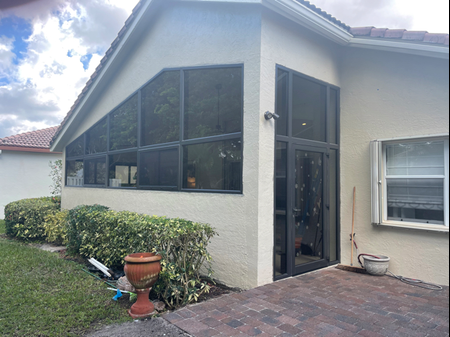
Roof covering of an outdoor space. This may or may not be enclosed with insect screening and considered non-habitable and unconditioned. The floor must be a minimum 4" above the ground. Building a simple screen room is a Category 1 sunroom addition.
Category 2 Sunroom
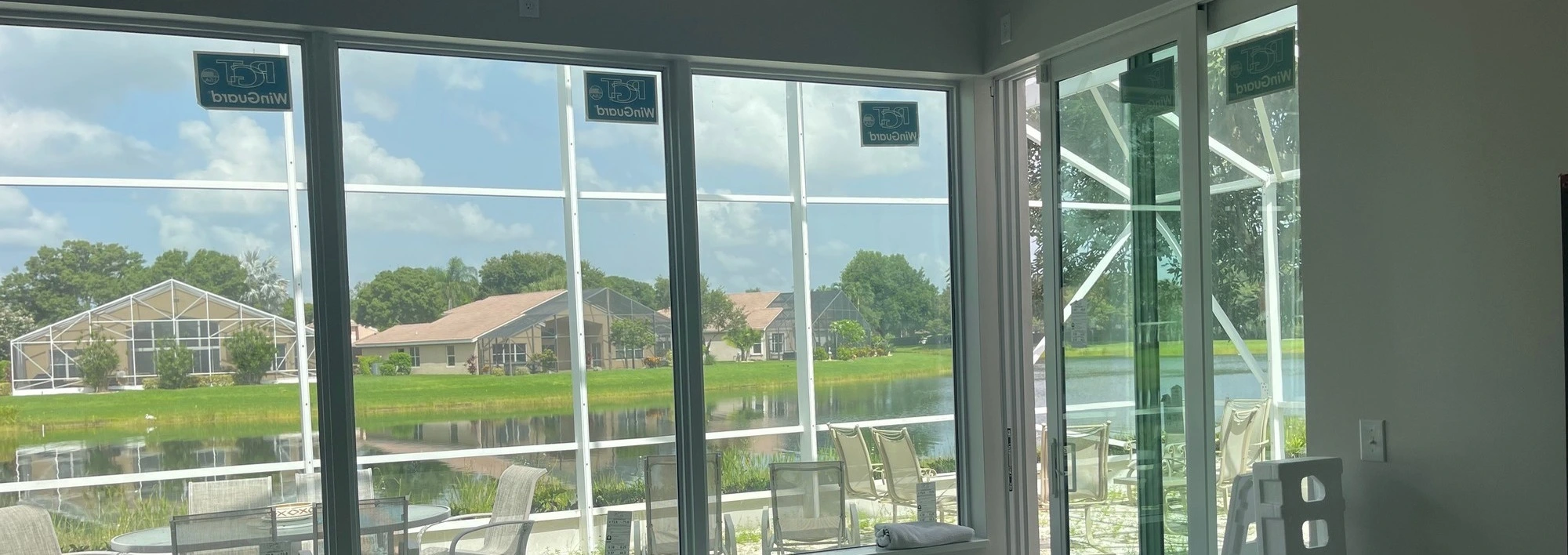
A roof covering of an outdoor space with walls. The wall openings can be enclosed with plastic windows (also known as acrylic windows). This is considered non-habitable and unconditioned. The floor must be a minimum 4" above the ground. There are commonly called "insulated aluminum" sun-rooms additions. The acrylic windows are placed within the aluminum metal supports. Not conventional material like wood or concrete block. The windows are rated for up to 75 mph. They are intended to be removed during high wind events (although most people don't). These are the most economical room. The cost increase to the next category is steep.
Category 3 Sunroom
A roof covering of an outdoor space with walls and windows that meet hurricane requirements. The windows can be non-impact with shutters or just impact. The cost for windows with shutters is about the same as impact windows. There is no reason to go that rout. The floor must be the same height as the finished floor in the home (not just 4" above grade like 1 & 2). Any doors or windows in walls shared with new space must remain. This is a not habitable and not conditioned sunroom addition. An egress light is needed.
Category 4 Sunroom
A roof covering of an outdoor space with walls and windows that meet hurricane requirements. The space will be heated and cooled separate from the home. We build these enclosures with mini split air-conditioners. The floor height must be equal to the finished floor in the home. This room is considered non-habitable and CONDITIONED sunroom addition. Any doors or windows in walls shared with new space must remain. Electrical outlet and egress light upgrade is needed.
Category 5 Sunroom
A roof covering of an outdoor space with walls and windows that meet hurricane requirements. This enclosure is designed to be opened to the home. Existing windows and doors are removed. The space is intended to be cooled or heated using the existing home system or a new separate one. Your home a/c may need to be upgraded or an additional a/c unit will need to be installed in the new sunroom addition. The floor height must be equal to the finished floor in the home. Electrical upgrades are needed. Wall outlets and an egress light must be added. This space is considered habitable and conditioned.
Process-Time Line-Costs
- Plans
- We have our own design professionals but can work with your plans if you have them already. Our plans will arrive in 2 to 4 weeks, generally.
- Permits
- Permits require 3 to 8 weeks but that varies based on your Building Authority.
- Construction time
- There are many milestones during the construction process, and each requires that we stop and pass an inspection. A typical project will require 15 to 20 mobilizations (workdays), start to finish. Mobilizations are not always back-to-back.
- Costs vary based on size and complexity. More glass = more $$
Enclosing an Existing Patio
or
Convert a Porch to a Room
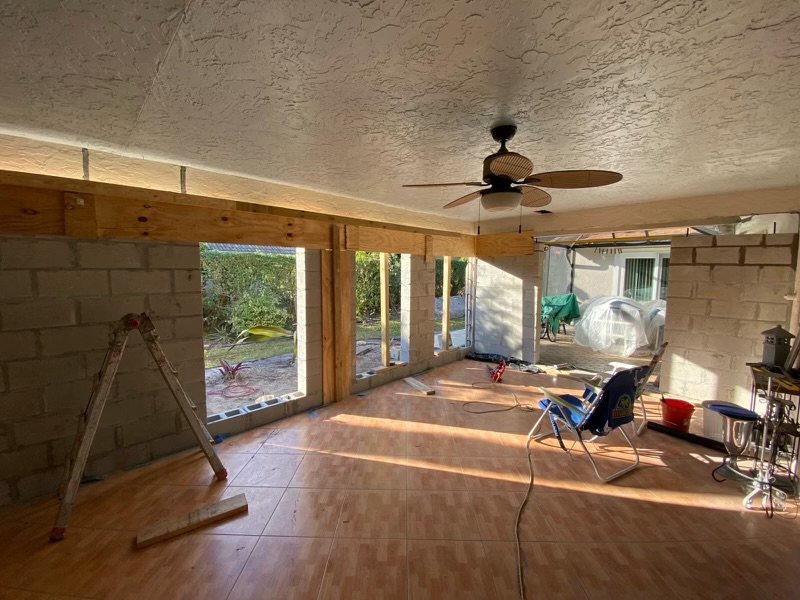
Some home owners want to enclose an existing patio that already has a roof. They may want any of the following or more:
Enclose your Patio and Make a Room
- Add a home Office
- Create a new playroom for children
- Expand the Homes Livingroom
- Expand the Home Living Space
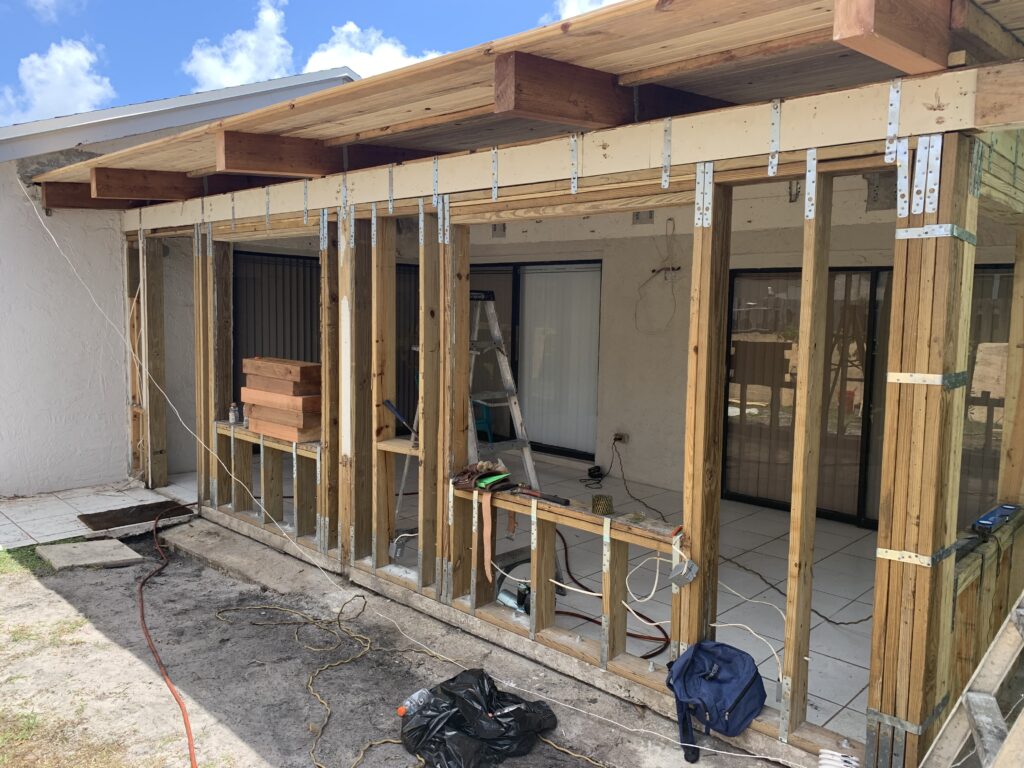
The list of uses for a new room for your house is extensive, all centered around adding delightful living space to your home. The return on investment from adding a extra living space is assured. Simply divide the cost of your home by the total square footage and compare it to the cost per square foot of the new room; you'll discover that the expense of the addition is lower than the original purchase price. Not to mention the additional benefits and convenience of more space in your home. The value of your home will undoubtedly increase.
Advantages of a
Convert a Porch to a Room as Living Space.
Building a home addition in Florida offers advantages such as increased property value, enhanced comfort and functionality, and cost savings compared to moving. Homeowners can customize the new space to meet their specific needs for a growing family, home office, or hobbies, while also avoiding the high costs and disruption associated with moving to a new home in the current market.
Financial and property value benefits for Enclosing Patio Room
- Increased property value: A well-executed home addition can significantly boost your home's resale value.
- Cost-effective alternative to moving: It is often cheaper to add on to your existing home than to pay for moving costs, higher mortgage payments, and real estate fees associated with buying a new home.
- Higher ROI: Smart additions, like a master suite or kitchen remodel, can provide excellent returns on your investment.
Four Season Sunroom Builder
People call sunrooms "season rooms" because they are categorized by how many seasons they are comfortable to use in. A "three-season room" is typically not heated and is used for spring, summer, and fall, while a "four-season room" is a fully insulated space with heating and cooling to be used year-round. The term "seasons room" highlights this distinction in functionality.
Three-season rooms
- Definition: Also known as a "three-season room" or "sun porch," it's a room that is enjoyed during three out of four seasons.
- Function: They are not heated, so they are not comfortable in cold weather. They can, however, be equipped with electric fans for better circulation.
- Construction: They often use lightweight materials and are built for comfort during milder months.
Four-season rooms
- Definition: A fully integrated addition to a home designed for year-round use.
- Function: They are equipped with a heating and cooling system, making them a comfortable extension of your living space in all seasons.
- Construction: They are more complex and expensive to build, requiring more insulation and connection to a primary HVAC system.
Other regional names
- The term "season rooms" is also used to reflect regional differences in climate.
- In warmer climates like Florida, they might be called "Florida rooms".
- In other areas with more extreme temperatures, they may be called "four-season rooms" to emphasize their ability to be used even in winter.
561-586-5655