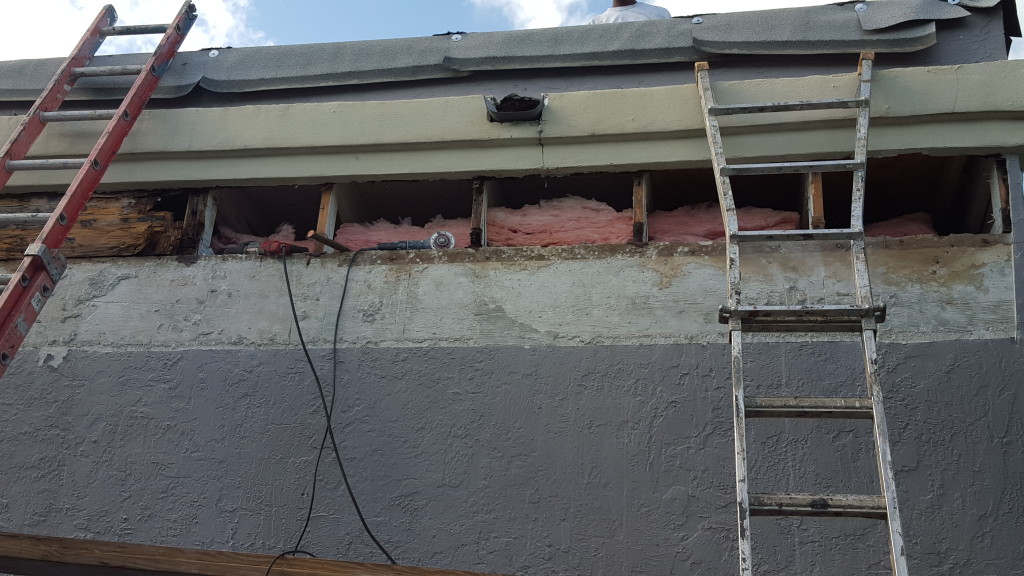
As far as keeping your home in full working order, your fascia boards are the unsung heroes of the home maintenance world. They work constantly to keep your gutters working correctly and to prevent rainwater from getting into your roof, plus they enhance the curb appeal of your property and help it look attractive in the process.
Despite working so well at protecting your home from water damage, as they are exposed to the elements, not to mention wildlife and general wear and tear, eventually they can become damaged, especially if they aren’t maintained properly. The same can be said for your guttering. Your gutters are designed to effectively transport excess water away from your roof, yet if they become damaged, this too puts you at risk of a leak.
One tell-tale sign of fascia damage is water located behind your guttering. In order to prevent this from becoming an issue, we first need to understand what to look out for.
Here’s a look at why water behind your gutters always means fascia damage, and a few common causes of fascia damage to be aware of.
What are Fascia Boards and Why Are They So Important?
While helping to enhance the overall aesthetic appeal of your home, fascia boards are about so much more than just looking good.
Located just behind your guttering, fascia boards are long horizontal planks which help to support your gutters, protect your roof from rain and water damage, and improve the overall aesthetics of your home and make your roof look neat and tidy.
Typically, fascia boards are made from wood, which is why they gradually degrade overtime. Wood rots, so the more exposure to rain and water it has, the faster it degrades. Of course, it can be stained, treated, and weatherproofed to help protect it from the elements, but eventually it will need to be replaced. To help offer additional protection and weather proofing, fascia boards can also be made from waterproof materials such as PVC, vinyl, aluminum, and other composite materials, though these too will need to be maintained.
Why Water Damage Behind Your Gutters Nearly Always Means Fascia Damage
As mentioned, your roof fascias are located just behind your guttering. They help to support your gutters and keep them working sufficiently at transporting excess rain water away from your roof and down the drains.
If you notice water located behind your gutters, this shows that your guttering system isn’t functioning as it should. Obviously, its primary role is to help excess rainwater to flow away from the roof, rather than seeping inside and causing a leak inside your home. If water is found behind your gutters, they’re not doing their job and it is almost certain that your fascias are to blame.
Your fascias are there to support the gutters and keep them level. If the fascia boards are damaged, your gutters could sag as they won’t have the support that they should. During periods of heavy rainfall where a lot of water flows through them, this will obviously cause them to weigh more, which will cause them to sag further.
Common Causes of Sagging Guttering
When gutters sag, it’s often down to a combination of things. Initially, fascia damage is to blame, though there are things that can exasperate the problem.
Here are a few common causes of sagging guttering.
Fascia Damage
Initially, a damaged fascia is likely to blame for sagging guttering. If fascia boards are damaged, they won’t provide the structural support that they should, and they’ll cause the gutters to weaken and sag.
Heavy Rainfall
Heavy rainfall is another common cause of a sagging gutter. Once the guttering has dipped slightly and become weaker due to the damaged fascia, it won’t be as strong as it once was. During periods of heavy rain, the gutters will be forced to deal with more water, which of course means more weight, which will cause them to sag and dip.
Blocked Gutters
Blockages can also cause gutters to sag and dip. If they become clogged with dirt, leaves, moss, and other debris, they’ll hold water instead of channeling it away. This will naturally make the guttering heavier.
General Wear and Tear
Finally, due to things like weather damage, age, and general wear and tear, your home’s guttering system may become weaker and not as strong as it once was. Add to this, a weakened fascia board and your gutters could find themselves in a lot of trouble.
Common Signs of Fascia Damage
Okay, so, we’ve established that water behind your guttering almost certainly indicated fascia damage, but what are some of the early warning signs of fascia damage that we need to watch out for?
Here are some likely culprits.
Visible Gaps
When your guttering attaches to your roof’s fascia boards, it is supposed to sit flush and level. If you can see any visible gaps between the fascia and the gutters, this is an indication that the fascia is damaged and may be rotten, as it is no longer able to support your home’s guttering system.
Water Overflowing
When it rains, if you can, try to take a look at your gutters and see if you can notice any water overflowing or cascading down like a waterfall. If you do notice this, it shows that the guttering has dipped and isn’t level, so it won’t work as well as it should.
Signs of Mold or Water Damage
If you can see any visible signs of mold or water damage just below the gutter line, this could indicate that your fascia is damaged and unable to support your home’s guttering system.
Visible Damage
Finally, the most obvious sign that your fascia may be damaged is if you can actually see any visible signs of damage, either to the fascia, your gutters, or both.
Inspect your fascia and take a look for cracks, discoloration, mold, rot, chips, broken brackets, or anything else which shouldn’t be there. If you can visibly see the damage, this likely indicates that it is fairly severe. Regardless, you should get it taken care of as quickly as possible, as the problem will only get worse.